The federal government controls supply of public hospitals and prices for services within those medical facilities and personal suppliers should keep costs in line if they desire to compete. Public medical facilities operate with an annual spending plan of client subsidies. Utilization is managed with significant copays, deductibles, and constraints on using Medisave and MediShield for specific services to dissuade unneeded treatment.
Instead of one system, United States residents and homeowners are insured under a range of in some cases overlapping systems. The United States is also the only industrialized country where a substantial variety of people are permitted to be uninsured and where a person's work can determine whether they have insurance and what insurance coverage they have.
9% of Americans had medical insurance, with 55. 7% http://titusatwj001.yousher.com/what-is-a-health-care-premium-fundamentals-explained receiving coverage through their employer, 16. 3% through direct purchase, 16. 3% through Medicare, 19. 6% through Medicaid, and 4. 7% through the military. 9 The individual sources of coverage add up to more than the total coverage because of overlaps (for instance, "double eligibles" who are registered in both Medicare and Medicaid).
Federal law needs insurance coverage to continue to be used to former workers, however the whole expense is Learn more bore by the guaranteed, who often choose to not pay the premium unless they are sick. Employer-based insurance isn't directly subsidized, however gets a "concealed" aid, estimated to be worth $260 billion dollars each year, due to premiums being tax exempt.
The Single Strategy To Use For Why Is Free Health Care Bad
Title XVIII of the Social Security Act was passed in 1965 and introduced Medicare and Medicaid, which have both expanded since. 10 Medicare, which is funded by payroll taxes, premiums, and general tax profits, offers coverage for individuals 65 and older and likewise those with qualifying conditions and specials needs under the age of 65.
Medicaid is an insurance coverage program for the poor administered by the states and funded with federal and state general revenues. Eligibility for Medicaid was considerably broadened under the Affordable Care Act in 2010 for states that picked to take part. Besides expanding Medicaid, the Affordable Care Act (ACA) in 2010 introduced an insurance mandate and government-run insurance market with aids for those without other coverage.
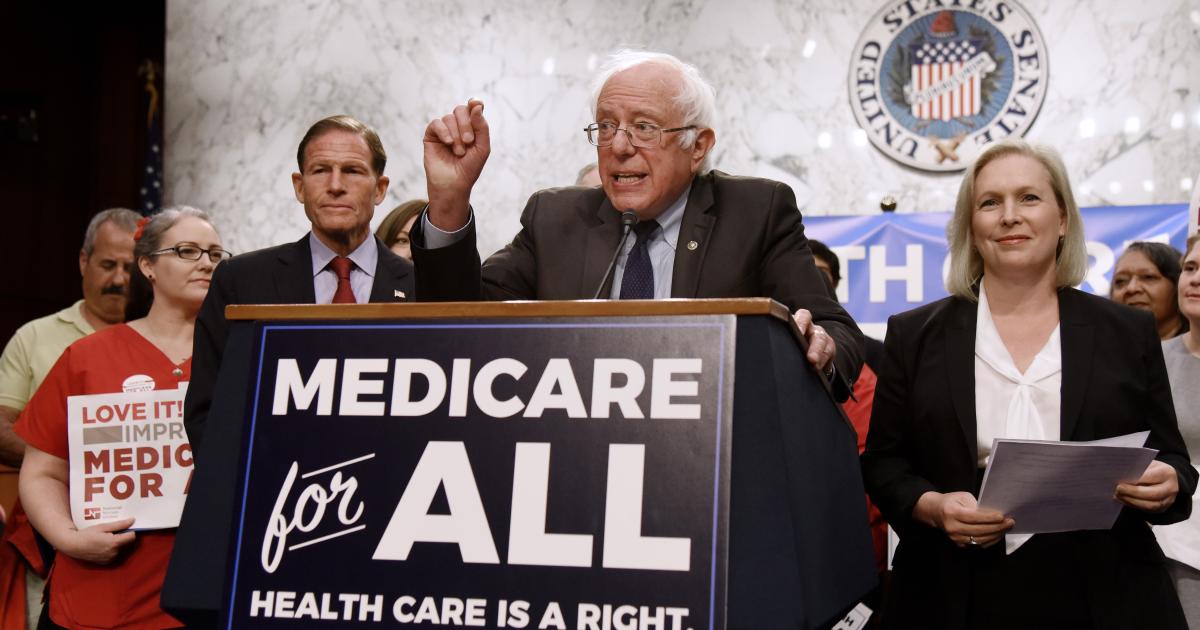
Prior to the implementation of the ACA, the uninsured rate was 13. 3%. 11 The Veterans Health Administration (VA) supplies look after nearly 9 million veterans annually. The system is an example of socialized medication, with 1,700 medical facilities, outpatient clinics, therapy centers, and long-lasting care centers owned directly by the federal government and most companies utilized by the government.
Around 1/3 of physicians in the US are primary care and the rest professionals. 70% of hospital are non-profit, 15% are for-profit, and 15% are government-owned. The United States invests even more on health care than any other country (which of the following is true about health care in texas?). In 2015, overall invest was 17. 8% of GDP, $3. 2 trillion dollars, for approximately $9,990 per individual.
The Facts About Which Of The Following Is Not Correct Regarding Why Health Care Costs So Much? Uncovered
There is no best healthcare system. The United States has some of the best medical professionals and healthcare facilities worldwide, for those who can manage them. The degree to which medical bills add to bankruptcy is difficult to tease out from other factors, however even those who are doubtful of the claim that medical costs trigger the majority of personal bankruptcies concede that they are a significant contributor.

There are compromises, obviously. Clients in The UK and Canada typically deal with far longer wait times for care, particularly "optional" care, than those in the United States (what is the affordable health care act). Suppliers are normally much better paid in the United States, which is a significant motorist behind our higher costs, however it also helps prevent the strikes and presentations for high pay in some cases seen in Germany and elsewhere.
As the argument over the future of health care in the United States rages on, it works to bear in mind that there are numerous ways to accomplish universal protection. Some nations Canada and Taiwan have actually developed single payer designs to care for their residents. Other nations such as Germany, Switzerland, and Singapore have revealed that it is possible to have universal coverage through a combination of public financing, employer involvement, and individual responsibility, while keeping a robust competitive market of insurance payers and medical companies.
These numerous approaches can be beneficial for Americans to understand, not just to draw concepts from as we seek to enhance the health care system in our nation, however likewise to see that cost-saving mechanisms and expanded coverage have consequences for other parts of the system. America requires to examine its own values as a country to choose what (if any) compromises we are willing to tolerate in order to cover a larger portion of our population.
The Greatest Guide To Countries Whose Health Systems Are Oriented More Toward Primary Care Achieve:
cdc.gov/ nchs/data/nhis/ earlyrelease/insur201705. pdf 2http:// www. who.int/ health_financing/ universal_coverage_definition/ en/ 3http:// www. npr.org/sections/health-shots/2016/01/22/463976098/debate-sharpens-over-single-payer-health-care-but-what-is-it-exactly 4http:// www. npr.org/sections/health-shots/2016/01/22/463976098/debate-sharpens-over-single-payer-health-care-but-what-is-it-exactly 5http:// www. commonwealthfund.org//media/files/publications/fund-report/2017/may/mossialos_intl_profiles_v5. pdf?la= en 6www. nhi.gov. tw/English/Content _ List. aspx?n= B9C9C690524F2543 & topn= 46FA76EB55BC2CB8 7https:// www. ncbi.nlm. nih.gov/ pubmedhealth/PMH0078019/ 8http:// www. hpm.org/Downloads/Singapore. pdf 9https:// www. census.gov/ content/dam/Census/ library/publications/2016/ demo/p60 -257. pdf 10https:// www. cms.gov/ About-CMS/Agency-Information/History/ index. html 11https:// www. census.gov/ content/dam/Census/ library/publications/2016/ demo/p60 -257. pdf 12https:// www. cms.gov/ research-statistics-data-and-systems/ statistics-trends-and-reports/ nationalhealthexpenddata/downloads/highlights. pdf 13https:// www. bloomberg - when it comes to health care.com/view/articles/2017-01-17/the-myth-of-the-medical-bankruptcy.
Over the last hundred years, the majority of countries have actually made substantial development towards universal health coverage. how to get free health care. The shared patterns includes rising earnings, increasing overall health expenditures and a broadening function for government in enhancing access to health care. In spite of this, nations vary substantially in their particular paths to universal health coverage.
They are affected by unforeseeable occasions associated to financial cycles, wars, upsurges and initiatives in other public policy spheres. They are likewise influenced by a country's own institutional advancement and experiences in other nations. As a result of these extremely contingent courses, countries reach universal health coverage at various earnings levels and with diverse institutional plans for broadening healthcare gain access to and mitigating financial threat.
It shows that domestic pressures for universalizing access to healthcare are incredibly different, extensive, and consistent. Secondly, universal health coverage is everywhere accompanied by a large function for government, although that function takes numerous forms. Third, the course to universal health coverage rests, emerging from settlement instead of style.
What Countries Have Universal Health Care Can Be Fun For Everyone
These commonness are shared by all four cases in spite of considerable distinctions in income, political programs, cultures, and health sector organizations. Attention to these commonness will assist countries looking for to broaden health protection today.
1. In a single-payer national medical insurance Click here for info system, as demonstrated by Canada, Denmark, Norway, Australia, Taiwan and Sweden (1 ), medical insurance is publicly administered and most doctors are in personal practice. U.S. Medicare would be a single payer insurance system if it used to everyone in the U.S. 2. Excellent Britain and Spain are among the OECD countries with national health services, in which employed doctors predominate and medical facilities are publicly owned and run.
single payer national health service system if it used to everyone in the U.S. 3. Highly controlled, universal, multi-payer health insurance coverage systems are shown by nations like Germany and France, which have universal medical insurance by means of non-profit "illness funds" or "social insurance coverage funds". They likewise have a market for supplementary personal insurance coverage, or "gap" protection, however this represent less than 5 percent of health expenditures in the majority of nations.